About Vanilla
Natural Vanilla Flavor vs. Synthetic Vanillin — What Food Makers Need to Know
When a recipe calls for vanilla, the choice between natural vanilla flavor and synthetic vanillin is not cosmetic — it affects flavor complexity, label compliance, and cost structure. Here is what separates the two, and how to choose for your application.
What is natural vanilla flavor?
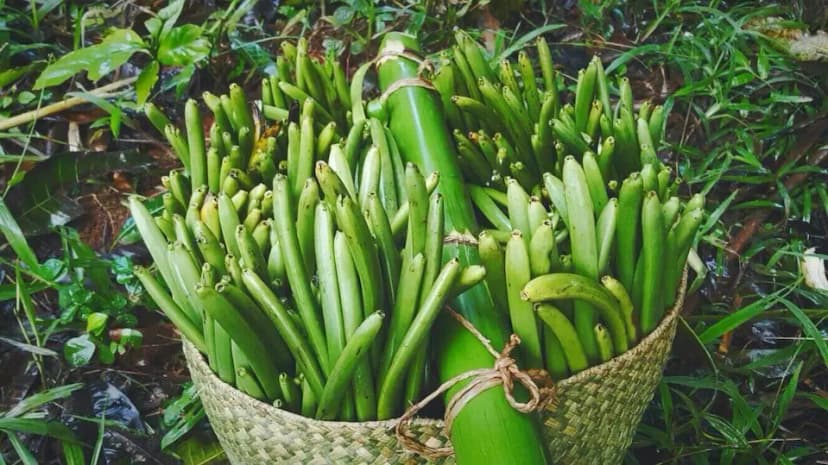
Natural vanilla flavor is extracted from the cured pods of Vanilla planifolia, the orchid species responsible for roughly 80% of global vanilla supply, produced primarily in Madagascar's SAVA region. The flavor profile of a well-cured bean contains more than 250 identified chemical compounds. Vanillin is the most abundant — typically 1.5–2% of dry bean weight in Grade A pods — but dozens of others contribute depth: p-hydroxybenzaldehyde, guaiacol, anisaldehyde, anisyl alcohol, furfural, and various phenolic esters that no single compound can replicate.
Under FDA 21 CFR §169, pure vanilla extract must be produced exclusively from vanilla beans at a defined minimum concentration (100 g beans per litre of liquid). "Natural vanilla flavor" on a label indicates the flavoring originated from a natural source — typically bean extraction — but carries no minimum concentration requirement.
What is synthetic vanillin?
Synthetic vanillin is a single-molecule isolate: 4-hydroxy-3-methoxybenzaldehyde, the dominant aroma compound found in vanilla beans. It is produced industrially at roughly 20,000 tonnes per year via three main routes:
- Guaiacol synthesis — reaction of guaiacol (derived from wood creosote or petrochemicals) with glyoxylic acid. Accounts for the majority of global production.
- Lignin oxidation — a wood-pulp byproduct route, now declining due to process economics.
- Ferulic acid bioconversion — enzymatic conversion of rice-bran ferulic acid. Sometimes marketed as "natural vanillin" because the substrate is plant-derived, but it remains a single isolated compound.
Cost comparison: synthetic vanillin runs $15–25 per kg versus $300–600 per kg for well-cured Madagascar beans — a 15–30× gap that drives most industrial purchasing decisions.
The flavor difference in practice
Synthetic vanillin delivers one note reliably. Natural vanilla delivers over 250. That gap is context-dependent:
- Cold and uncooked applications — pastry cream, ice cream, ganache, cold beverages — show the largest sensory difference. Secondary compounds are fully volatile and perceptible. Synthetic vanillin can register as sharp or one-dimensional at higher concentrations in these applications.
- High-heat baking — the gap narrows considerably. Many volatile secondary compounds are driven off during baking, and the dominant remaining compound is vanillin regardless of source. This is why synthetic vanillin performs adequately in mass-produced cookies or cake mixes.
- Extract production — natural beans are the only legally compliant input for products labeled "pure vanilla extract" in the US, EU, and most major markets. There is no substitution path here.
How to read vanilla on an ingredient label
| Label term | What it means |
|---|---|
| Vanilla extract / Pure vanilla extract | 100% from vanilla beans. Regulated minimum concentration (FDA 21 CFR §169.175). |
| Vanillin | Synthetic vanillin, or rarely isolated natural vanillin. Single compound. |
| Artificial vanilla flavor | Synthetic vanillin-based flavoring. |
| Natural vanilla flavor | Typically bean extraction — but no concentration floor. Ask for a COA. |
| Natural vanillin | Often rice-bran ferulic acid conversion. Single compound, not full-spectrum. |
| Natural and artificial vanilla | Blend of bean extract and synthetic vanillin. Common in mid-range retail products. |
Side-by-side comparison
| Natural vanilla (beans) | Synthetic vanillin | |
|---|---|---|
| Source | Vanilla planifolia pods | Guaiacol, lignin, or rice bran |
| Flavor compounds | 250+ | 1 (vanillin only) |
| Vanillin in raw material | 1–2% of dry bean weight | ~99% pure isolate |
| Typical cost per kg | $300–600 (whole beans) | $15–25 |
| Alcohol-free format | Yes — powder, caviar, paste | Yes |
| Compliant for "pure vanilla extract" | Yes | No |
| Clean-label positioning | Yes | Market-dependent |
| Best applications | Premium products, cold prep, extract production | Industrial baking, cost-sensitive formulations |
Which to use for your application
Use natural vanilla when: you are producing pure vanilla extract; your product is cold-processed or minimally heated; you need clean-label or premium positioning; or you are in a market where consumers actively read ingredient lists.
Use synthetic vanillin when: the product undergoes high-heat processing that volatilizes secondary compounds anyway; you are formulating at industrial scale where cost per unit determines margin; or you need a stable, consistent single-compound input with a long shelf life.
A middle path used by many mid-range producers: blend natural extract for character and synthetic vanillin for volume, declared as "natural and artificial vanilla flavor."
For extract makers: choosing the right bean grade
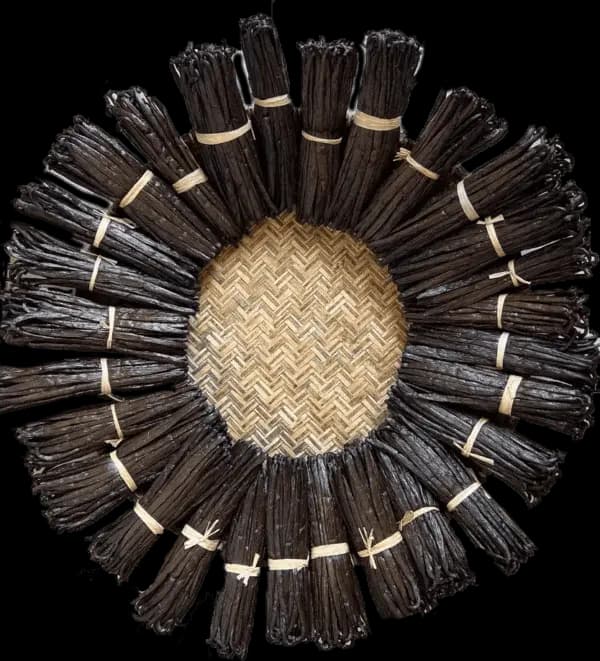
If you are sourcing beans for extraction, grade directly determines your vanillin yield per dollar. Grade B (extract-grade) beans carry 15–25% moisture versus 30–35% for Grade A — meaning more vanillin per kilogram purchased and lower cost per gram of finished extract. Grade A is reserved for whole-bean applications where visual quality and direct aroma matter.
For alcohol-free vanilla in dry mixes, chocolates, or formulations targeting consumers who avoid ethanol: vanilla bean powder delivers full-spectrum bean character without solvent. Vanilla caviar is the high-density option — extracted seeds with negligible moisture, maximum vanillin concentration, and visible speckling in finished products.
FAQ
Is vanillin natural or artificial?
It depends on the production route. The majority of global vanillin is synthetic, derived from guaiacol or lignin. Vanillin from rice-bran ferulic acid bioconversion is sometimes marketed as "natural" because the substrate is plant-derived — but it is still a single isolated compound. Only vanilla extract from vanilla beans contains the full 250+ compound profile of genuine natural vanilla.
Does pure vanilla extract contain vanillin?
Yes — vanillin is the dominant flavor compound in vanilla beans and therefore the primary aromatic in any vanilla extract. A standard 1-fold extract contains roughly 100–250 mg/L of vanillin, entirely derived from the bean. The difference from synthetic vanillin is what accompanies it: hundreds of co-extracted natural compounds that build depth and roundness in the final flavor.
Can you substitute synthetic vanillin for vanilla extract?
Not for "pure vanilla extract" labeling — that is a regulatory category. As a flavor substitute in formulations, a rough starting point is 1/4 teaspoon of powdered vanillin per teaspoon of 1-fold extract, but you lose all secondary compounds. Always validate by sensory panel in your specific application, not by vanillin concentration alone.
Why is natural vanilla so expensive?
Vanilla vines require 3–4 years to mature. The flowers open for a single day and must be hand-pollinated within hours. After pollination, beans spend 9 months maturing on the vine, then 4–6 months curing before they are export-ready. In Madagascar — source of roughly 80% of global supply — this entire process is performed manually on small family farms, most under one hectare. Add cyclone exposure and price volatility, and you have a crop with no path to cheap industrialization.
What does "natural vanilla flavor" mean on a label?
Under FDA 21 CFR §101.22, "natural flavor" is any flavoring derived from a plant or animal source. Natural vanilla flavor typically means vanilla bean extraction, but unlike pure vanilla extract, it carries no minimum bean-to-solvent ratio requirement. Concentration and quality vary widely between suppliers. If you are formulating a product, always request a Certificate of Analysis showing vanillin concentration before specifying it.